The Path to The Craft
welcome to witchcraft 101

I’ve been thinking a lot lately about why witchcraft feels like such a natural next step for so many women who have deconstructed religion. Not in a dramatic, rebellious way — but in a quiet, almost inevitable way. Like something circling back around rather than something brand new.
For me, religion was never a casual experience. I was born Catholic, grew up Southern Baptist, lived next door to a Church of Christ, and later married into Mormonism. It was everywhere. Not just belief, but structure, rhythm, language, expectation. And even before I had the words for it, I knew I didn’t belong inside it long-term. Not because I lacked reverence, but because I couldn’t reconcile hierarchy with intuition, or fear with love.
When my husband and I finally deconstructed, we didn’t replace religion with something else. We didn’t go looking for a new container. We just… stopped. And what surprised me most wasn’t relief — it was the lingering familiarity of certain things I thought I’d left behind.
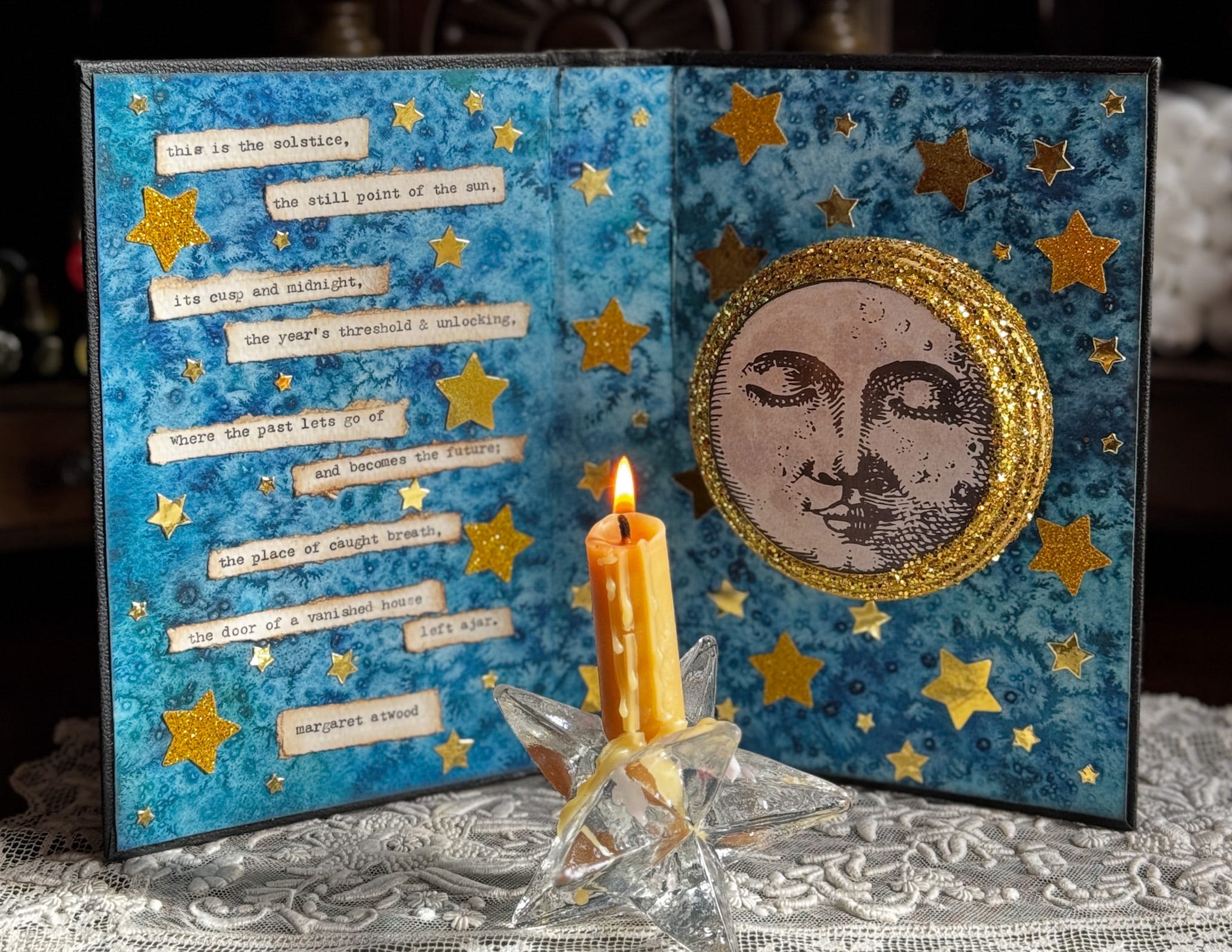
Candles still felt grounding.
Music still moved something ancient in me.
Silence still felt sacred.
Ritual still worked.
And that’s when it clicked for me: what worked in religion wasn’t the dogma. It wasn’t the moral framework or the authority structure. It was the human technology of ritual itself.
If ritual didn’t work, churches wouldn’t use it as the cornerstone of their practice. Candles. Songs. Incense. Repetition. Sacred text. Communion — which, stripped of euphemism, is ritual consumption tied to meaning, covenant, and transformation. You can call it symbolic if you want, but symbolism doesn’t make something inert. It makes it effective.
Religion didn’t erase magic. It organized it. Centralized it. Regulated who was allowed to use it and how. What was once relational became hierarchical. What was once participatory became mediated.
And women, historically, were pushed out of the equation the moment knowledge became power that needed controlling.
That’s why I don’t see witchcraft as something dark or demonic, despite how it’s been framed for centuries. I see it as women remembering how to work with meaning, intention, and energy without asking permission. Not to control the universe, not to bypass reality — but to participate in it consciously.
I also don’t believe witchcraft requires abandoning Christianity, or faith, or God, or Jesus. I think those divisions were political, not spiritual. I think a lot of women feel pulled toward the craft not because they want to reject reverence, but because they want it back without fear. Without shame. Without someone standing between them and their own knowing.
For me, witchcraft lives at the intersection of the practical and the magical. It doesn’t need to be explained all the way down to the studs to be real. There is so much we still don’t understand about how the world works — consciousness, time, emergence, even anesthesia. Not understanding something fully has never stopped it from functioning.
Science itself is full of things that work long before we can quantify them. Historically, many of our sciences grew out of what was once dismissed as witchcraft: astronomy from astrology, chemistry from alchemy, medicine from midwifery and folk healing. What changed wasn’t the validity of the observations — it was who got to name them, measure them, and profit from them.
That’s why I’m comfortable standing in the space of “this is possible” without needing to explain it away or wrap it in certainty. Witchcraft, to me, isn’t about rules or punishment or cosmic scorekeeping. It’s about intention instead of autopilot. Relationship instead of fear. Awareness instead of obedience.
I’m not here to teach anyone how to be a witch, and I’m certainly not here to replace one belief system with another. I’m just sharing what I’ve come to know — from experience, from history, from watching patterns repeat themselves over and over again. My intention is to help you reveal the magic that is already inside you.
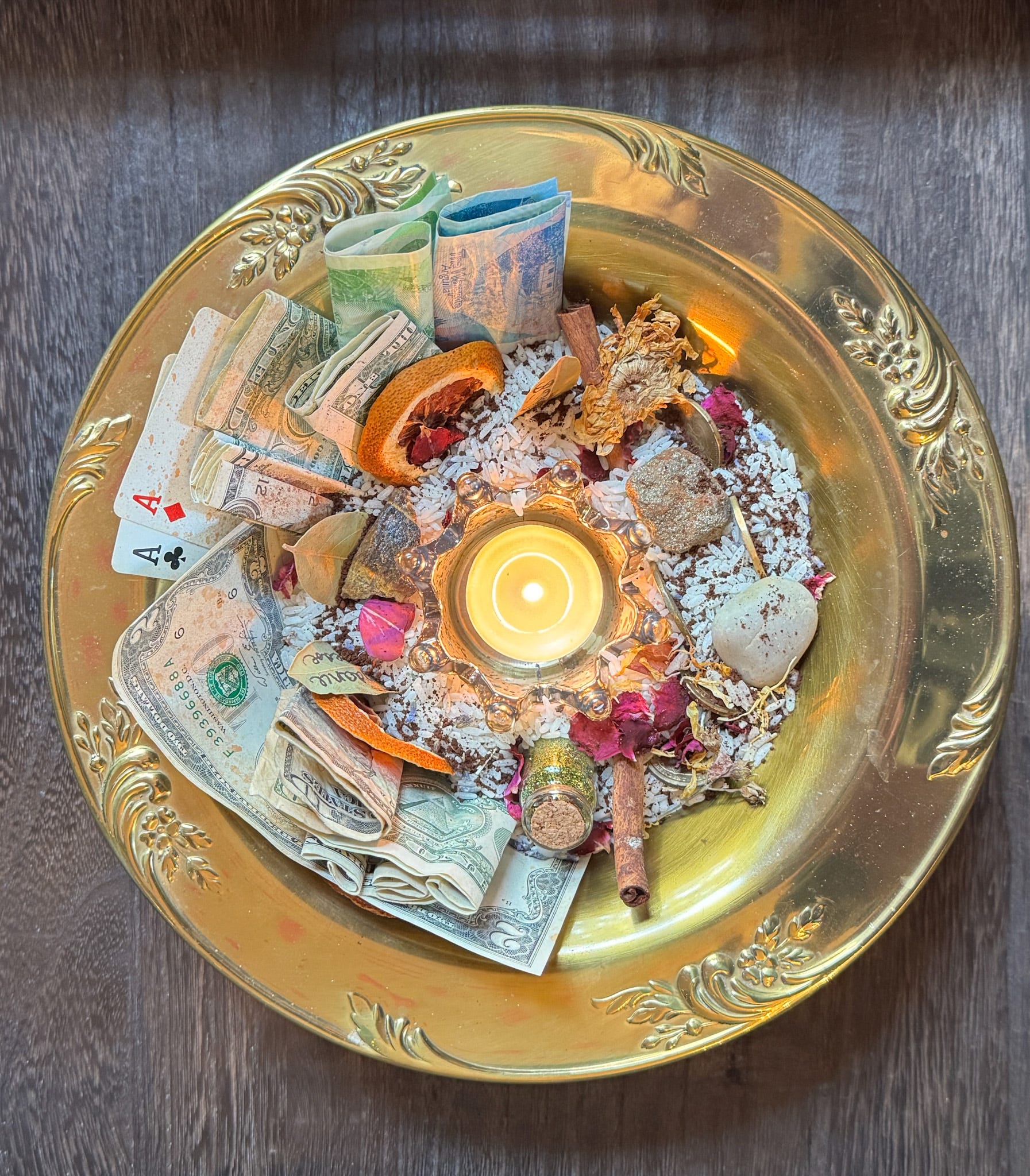
So welcome to my new series: Witchcraft 101
This series will move slowly. One foot in history and power, one foot in practice and presence. Because understanding how things were controlled helps explain why they still feel charged. And reclaiming ritual without context risks recreating the very structures so many of us walked away from.
If something in this resonates, it’s because you already recognize the language. And if it doesn’t, that’s perfectly fine too.
This isn’t a doorway you have to walk through. It’s just a light left on in a room that’s always been there, ready to welcome you inside if you’d like to pull up a chair and sit a spell.
You are so smart and so generous. I have never heard a better explanation. Thank you. I've never been attracted to witchcraft because I had it confused with religion. I can be more open now.
This also fits well with my experience.
I always struggled with the Patriarchal systems and the explanations that “this is just the way we do things” and the black and white divisive certainty that those who knew ____ were saved and those who didn’t were damned. Those who did this set of things were good and those who said or did this other set of things were bad. “Shoot” was acceptable but “Shit” said with the same intensity was not. I was “loved” by my church youth group because Jesus and God loved all BUT I wasn’t liked or respected. I asked too many questions, I liked too many different people. At the same time I cannot visit a church/ temple/ mosque/ holy place without saying an earnest prayer to the Gods and Goddesses and I inevitably leave with tears of my fervent prayers dripping down my face. We can believe in the feminine divine wisdom and in a nonbinary Spirit and accept that throughout the world there are people who celebrate Spirit with rituals unique and similar and none of us have to be wrong.